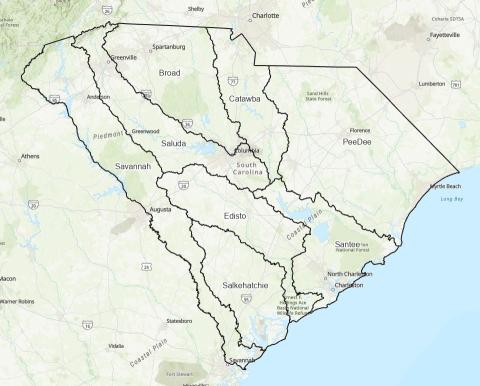

Watershed Coordinators
Northwest Region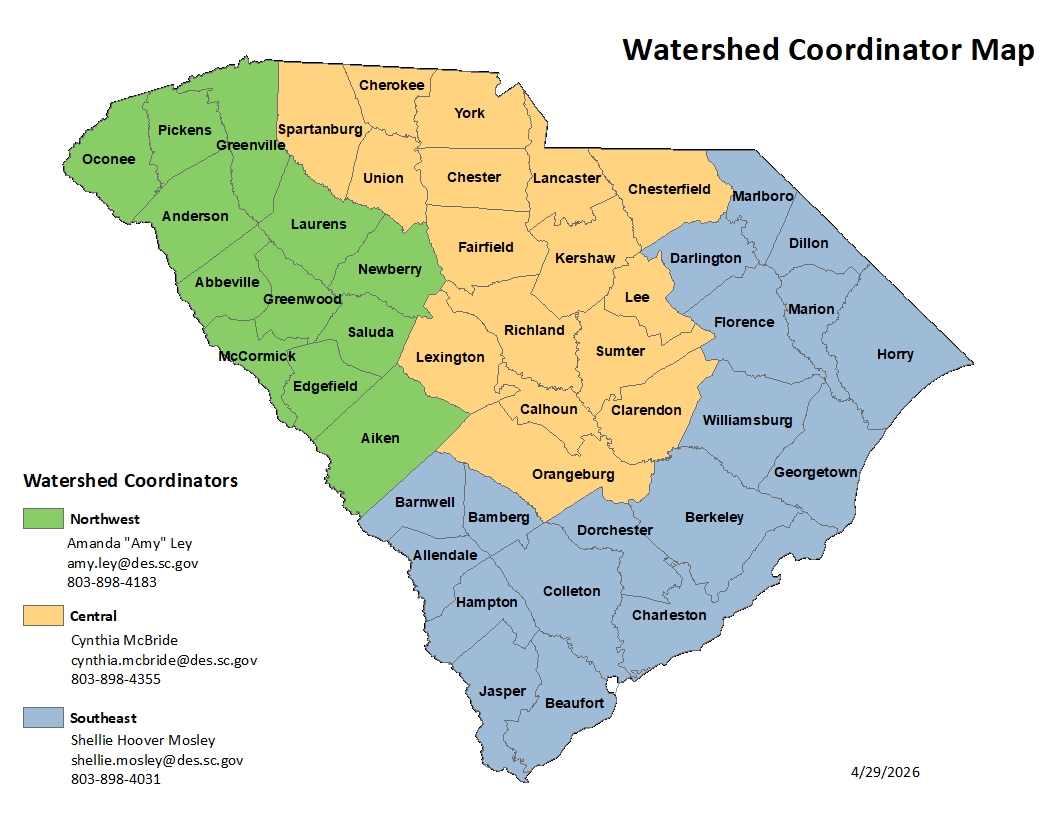
Amanda "Amy" Ley
(803) 898-4183
amy.ley@des.sc.gov
Central Region
Cynthia McBride
(803) 898-4355
cynthia.mcbride@des.sc.gov
Southeast Region
Shellie Hoover Mosley
(803) 898-4031
shellie.mosley@des.sc.gov
NPS Program
Nonpoint Source Coordinator
Shea McCarthy
(803) 898-4401
shea.mccarthy@des.sc.gov
319 Grant Administrator
Jana Baxley
(803) 898-4213
jana.baxley@des.sc.gov
Section Manager
Chanda Cooper
(803) 898-4187
chanda.cooper@des.sc.gov
Nonpoint source (NPS) pollution occurs when precipitation or irrigation runs over land picking up pollutants and carrying them to waterways. Unlike point source pollution, nonpoint source pollution is diffuse, making it difficult to identify and control the source of the problem.
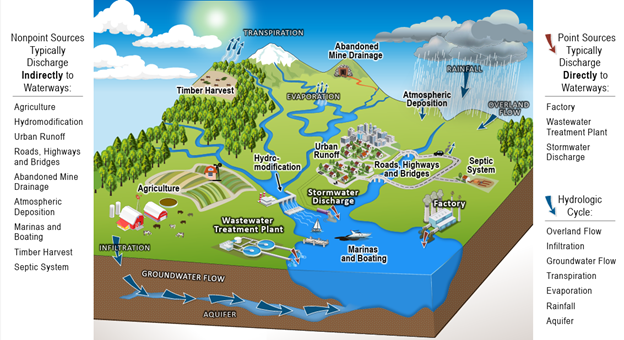
The primary goals of the Nonpoint Source Program are to restore and protect water quality from nonpoint source pollution.
The 1987 amendments to the Clean Water Act (CWA) established the Section 319 Nonpoint Source Management Program. Under this section of the CWA, states receive annual grant funding that supports a wide variety of activities, including technical assistance, financial assistance, education, training, monitoring, and other efforts to minimize nonpoint source impacts on water quality. The Section 319 program is coordinated by the United States Environmental Protection Agency (EPA) on a national scale.