

Back to All Blogs
 Back to All Blogs
What Do I Do If My Well Goes Dry?
Tuesday, Aug 18, 2026
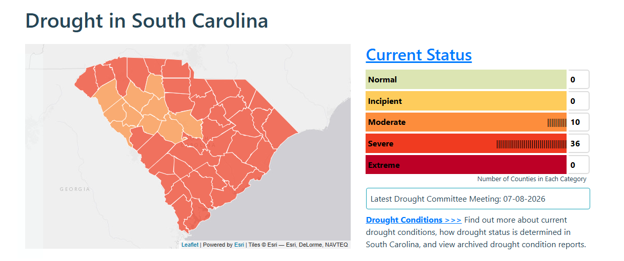
With South Carolina experiencing moderate to severe drought conditions, some private well-owners may notice changes in their water supply. If your residential well goes dry, there are steps you can take and resources available to help.
Private wells rely on groundwater, and during extended periods of dry weather, groundwater levels can decline. If you’re experiencing a dry well, the first step is to contact a licensed well driller to evaluate your well and discuss potential solutions.
What Are My Options?
Depending on the condition and depth of your existing well, a licensed well driller may recommend one of several options:
- Lower the pump. If there is still enough water deeper in your well, the pump may be lowered to access it.
- Deepen your existing well. If there is little or no water in a drilled rock well, it may be possible to deepen the existing well.
- Drill a new well. If deepening the existing well isn't physically possible or cost-effective, a well driller may recommend drilling a new, deeper well on your property.
- Consider a community well. If an entire neighborhood or community is experiencing dry wells, residents may consider having a new community public well-constructed. Contact your local SCDES office for permitting information.
- Connect to a public water system. If public water service is available in your area, connecting your home to the system may be an option.
Know the Rules for New Wells
All new individual residential wells in South Carolina must be permitted by SCDES under Regulation 61-44 and constructed according to the state's Well Standards, Regulation 61-71.
Well drillers must also be licensed by the S.C. Department of Labor, Licensing and Regulation.
Before making changes to your well or having a new well drilled, be sure to work with the appropriate licensed professionals and follow state requirements.
Stay Informed During the Drought
Drought conditions can change, so staying informed is important. The latest drought conditions in South Carolina are available through the S.C. Department of Natural Resources Office of Climatology at scdrought.com.
Some public water systems have also implemented mandatory or voluntary water restrictions. Contact your water supplier for the latest information about restrictions in your area.
SCDES will continue to provide updates on additional drought-related information and resources.
Need Help?
For questions about residential wells, contact SCDES:
Toll Free: 1-888-761-5989
Toll Free Fax: 1-888-761-6681
Greg Withycombe: 803-898-3232
A dry well can be stressful, especially during an extended drought. If your well stops producing water, don't wait to seek assistance. A licensed well driller can help determine what options may be available for your home and property.